Apartment and Condo Water Damage in Everett
About half of Everett's homes are rented, and the city has a lot of apartments and condos, especially in the south end. In a building like that, water damage almost never stays in one unit. A tub that overflows on the third floor wets the second-floor ceiling, the walls between, and sometimes the first floor too. Restoration in a multi-unit building means drying more than one home, coordinating with more than one person, and keeping records that the landlord, the association and the insurers will all want. This page is written for owners, landlords and property managers, with a section for tenants on what to do first.
Who Usually Handles What
| Situation | Who usually arranges the restoration | Notes |
|---|---|---|
| A rented apartment or house | The landlord or property manager | The tenant reports it in writing; the landlord's policy covers the building |
| A condo, water inside one unit | The unit owner, for that unit's interior | The association's documents set the line between the unit and the building |
| A condo, water from a common pipe or the roof | Usually the association | Follows the master policy and the governing documents |
| Water from the unit above | The owner or landlord of the unit where it started, and of the unit below | Both units usually need drying; insurers sort out who pays |
| Not yet known | Whoever controls the building | Trace it first; drying shouldn't wait |
This is the usual pattern, not legal advice. Washington's landlord-tenant law and a condo's governing documents decide the specifics. More: owner, landlord or tenant.
Water Leaking From the Upstairs Bathroom
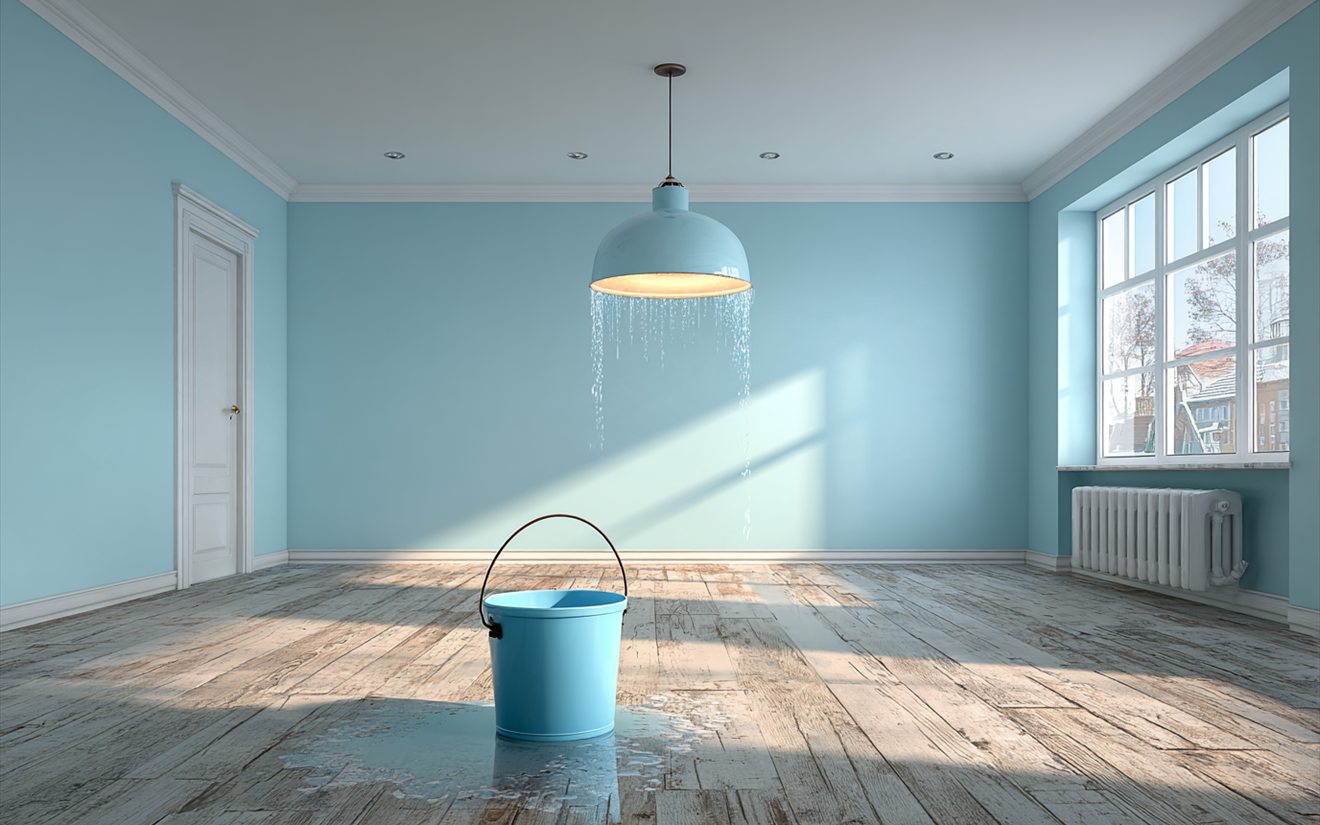
The most common multi-unit call starts with a bathroom: a toilet supply line, a tub overflow, a shower pan that has been leaking slowly into the subfloor. The water goes down through the floor, soaks the insulation or the space between floors, and comes out of the ceiling below, often at a light fixture because that's the easiest path. The stain in the lower unit can be some distance from the fixture above, because water travels along joists before it drops. Drying usually means opening part of the ceiling below, drying the space between the floors, and checking the subfloor and walls in the upper unit too.
For Landlords and Managers
- Act on the first report. Water in a rental doesn't wait for the paperwork, and the longer it sits, the more of the building has to be dried.
- Check the units around it. Above, below and beside the wet unit, because water travels.
- Keep the tenants informed in writing: what's happening, when the work will be done, and whether they need to move belongings or stay elsewhere.
- Keep records: the first report, photos, the company's moisture readings, and the scope of work, for your policy and for any dispute about the cause.
- Make sure the right person signs. In a condo or HOA building, confirm who can authorize work in common areas.
If You Rent the Unit
Tell your landlord or property manager right away, and follow up in writing with the date, what you saw and photos. Move your belongings away from the water and unplug anything near it. If water is still running from a fixture in your unit and you can safely shut it off, do. Don't start repairs yourself. Your landlord normally arranges the drying and repairs for the building, and a renter's insurance policy, if you have one, is what covers your own belongings.
Drying Two Units at Once
In a multi-unit building, the drying plan has to cover every space the water reached, not just the unit where someone first noticed it. That usually means equipment in the upper unit, where the leak started and the subfloor got wet, and in the lower unit, where the ceiling and walls took the water. Sometimes it means the space between floors, a shared hallway or a storage room too. The company will need access to each space, so it helps when the landlord, the manager or the association lines that up early.
Noise and inconvenience come with it. Air movers and dehumidifiers run day and night for several days, and occupants in both units should know that before the equipment arrives. Explaining it up front avoids a tenant switching off the equipment overnight, which sets the drying back.
In the wet months, expect the drying to take longer than in summer. Outside air is damp, buildings are closed up, and some units sit over crawlspaces or slabs that stay cold. The readings decide when each space is finished, and different units in the same building can finish on different days.
What to Keep for the Policies
- the first report of the leak, with the date and time
- photos of the source and of every wet area in each unit
- the moisture readings for each unit, from every visit
- the company's written scope, and any changes to it
- a list of damaged contents, by unit, with photos
When more than one insurer is involved, as is common with water between units, this record is what lets each one sort out its share.
Who Pays When Water Comes From the Unit Above?
It depends on what caused it and on the policies and documents involved. Usually each party reports to their own insurer, and the insurers work out who's responsible. In a rental, the landlord handles the building either way. In a condo, the association's documents decide which parts belong to the association and which to each owner.
Can the Lower Unit Be Dried Without Getting Into the Upper One?
Sometimes, if the leak was brief and the space between the floors can be reached from below. Often the company needs to check the upper unit's floor and walls too, because that's where the water started and some of it is still there. That needs the upper unit's occupant or owner to agree.
Apartments and Condos Around Everett
Bay side
North end and river
South and central
South county
- MukilteoSouth county
- Mill CreekSouth county
- LynnwoodSouth county
- EdmondsSouth county
- Mountlake TerraceSouth county
- Martha LakeSouth county
Across the river
- MarysvilleAcross the river
- Lake StevensAcross the river
- SnohomishAcross the river
- MonroeAcross the river
A pipe or appliance was the source? See pipes, heaters and appliances.