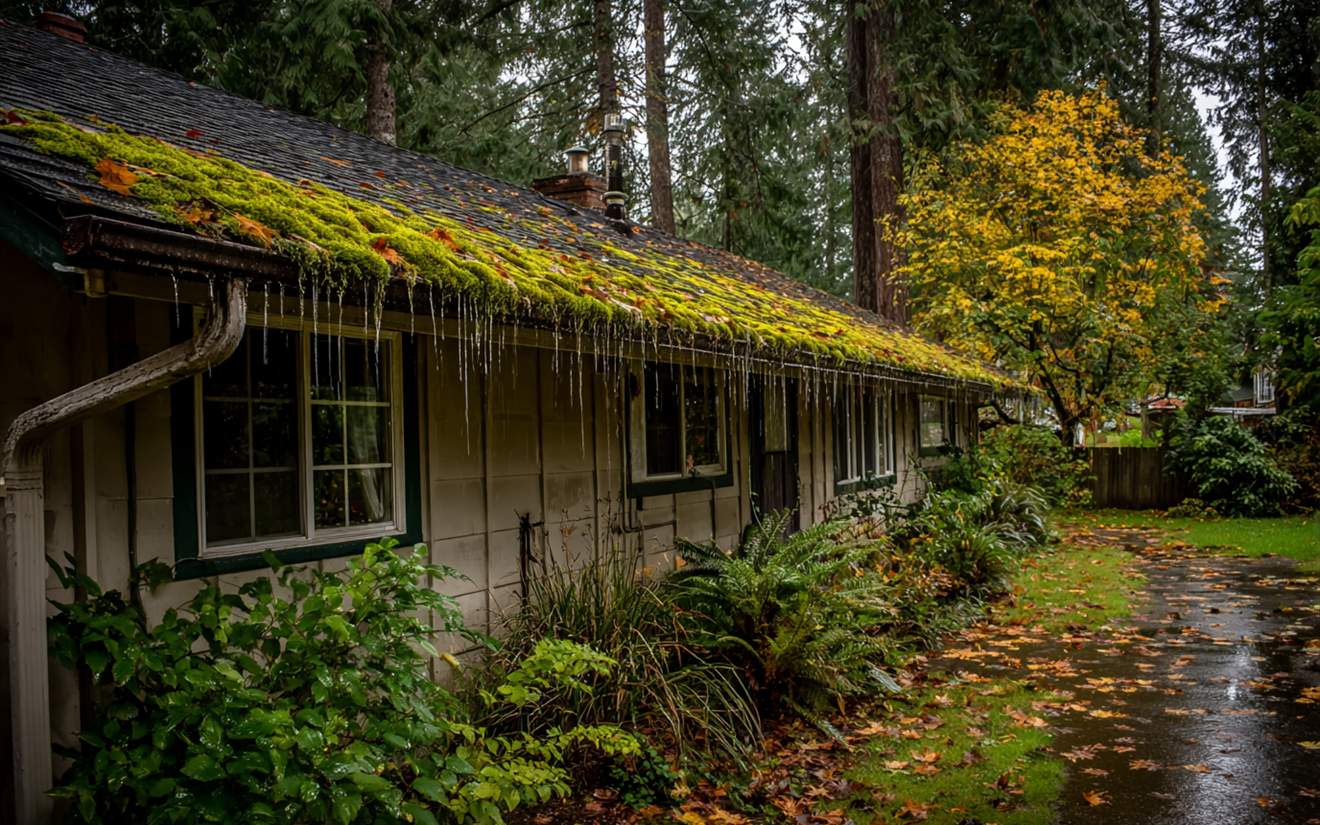
Everett's Rain Year: What 40 Inches Does to a House
A month-by-month look at the wet season and the dry one.
HOW WATER GETS IN
Rain, ground water, a pipe or the unit above: six pages, sorted by the way the water arrived.
In the wet months, the source of the water decides most of what happens next. Rain that got past the roof wets the attic and ceilings first. Ground water arrives at the lowest part of the house and keeps coming while the soil is full. A broken pipe or a failed appliance dumps clean water fast, usually into walls and under floors. Water from another unit means two homes to dry and more than one person to talk to. If you know where it came from, pick that page. If you don't, the restoration page covers the whole job, from finding the source to the last repair. Have it pumped out and dried: (425) 699-0306.
The full job: source, extraction, drying with readings, repairs.
Pumping out standing water, then cleaning up after it, from inside or outside.
Ceiling stains, wet walls under windows and rain at the top of a wall.
Seepage, a high water table and water at basement windows.
Split lines, leaking heaters, washer hoses and the water they leave inside walls.
Water from the unit above or next door, for owners, landlords and managers.
| You're seeing | Read |
|---|---|
| A stain that grows during a long rain | Rain getting in |
| Water along the bottom of a basement wall or on the floor | Basements & crawlspaces |
| Water on the floor after a pipe, heater or washer failed | Pipes, water heaters & appliances |
| A drip or stain below someone else's unit | Apartments & condos |
| Standing water in a room, the garage or the basement | Water removal & cleanup |
| Several of these at once, or no idea where it started | Restoration & mitigation |
A month-by-month look at the wet season and the dry one.
The slow way rain gets into an attic.