Burst Pipe and Appliance Water Damage in Everett
A water pipe that bursts in the house, or an appliance that fails, puts pressurized water into a home fast, often a lot of it before anyone notices. It's usually clean water at first, which helps, but it goes everywhere the house lets it: down wall cavities, under flooring, through ceilings to the floor below. The first step is always the same: shut off the water at the main. Then the job is to find every place the water went, get it out, and dry it before it turns into a bigger problem. The pipe or appliance itself gets repaired separately.
Where Lines Fail in Everett Houses
- Cold snaps. Everett's winters are mostly mild, but a few nights of cold air pouring down from the north can freeze lines in crawlspaces, garages, unheated additions and outside walls. The split often stays plugged with ice until it thaws, so the leak starts a day later. More: cold snaps and outflow winds.
- Older plumbing. Many north-end houses have been replumbed in stages, so galvanized steel, copper and plastic can all be in one house. Old galvanized lines rust from the inside and leak at the joints.
- Supply connectors. The flexible lines under sinks and behind toilets wear out and split, especially older plastic ones.
- Crawlspace lines. In a house over a crawlspace, a leak can run for weeks under the floor before anyone smells it or sees a soft spot.
Water Heaters and Washers
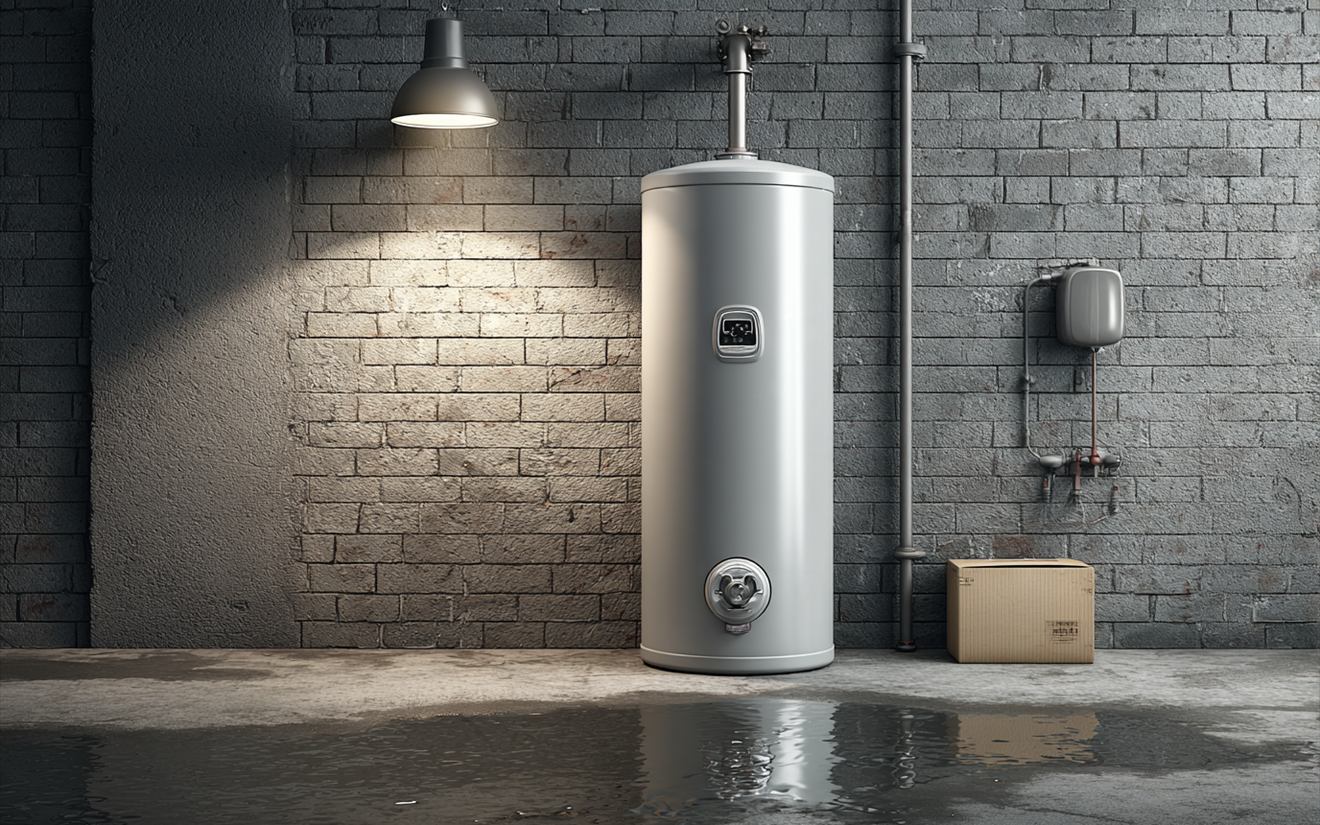
A tank water heater holds 40 to 50 gallons and is connected to the supply, so a leak at the tank or its fittings can keep flowing. In a garage, the water spreads across the concrete and into the bottom of the wall shared with the house. In a basement or an interior closet, it soaks into the floor and the walls around it. Washers fail at the hoses more than anywhere else, and an upstairs laundry room puts the water straight into the ceiling below. A heater that has been bumped by a car in the garage or shifted in an earthquake can pull its connections loose, so a leak at the fittings after either is worth checking.
Water Inside Walls and Under Floors
The visible puddle is the easy part. When a pipe bursts inside a wall, the water runs down the cavity to the bottom plate and spreads along the floor. When an upstairs fixture fails, the water goes through the subfloor, soaks the insulation and comes out through the ceiling below, sometimes far from the source. A restoration company maps the wet area with meters, opens walls only where the readings say they're wet, pulls out wet insulation and pad, and dries the framing and subfloor before anything is closed up.
The First Ten Minutes
- Shut off the main water valve. Know where it is before you need it: often in the garage, a basement, or a box near the street.
- If water is near outlets or the panel, keep clear; switch off breakers only if the panel area is dry.
- Turn off the water heater (gas to pilot, or power off for electric) if the leak is at the heater.
- Move belongings out of the water, and lift furniture onto blocks or foil.
- Photograph the source and every wet room.
- Call.
Leaks Nobody Sees: Lines Under the Floor
Many Everett houses, especially single-story homes from the middle of the last century, have their water lines running through a crawlspace. That's convenient for plumbing work and inconvenient for noticing leaks. A small drip from a fitting under the kitchen can run for weeks onto the vapor barrier and the dirt. The insulation between the joists soaks it up and holds it against the subfloor. The first sign upstairs is often a faint musty smell, a floor that feels slightly soft near the sink or bath, or a water bill that creeps up with no obvious cause.
If you suspect a crawlspace leak, check the water meter with every fixture off. If the dial is moving, water is going somewhere. A company can look under the house, find the wet area with meters, pull out wet insulation and dry the joists and subfloor once the line is repaired.
Fewer Leaks Next Year
- Replace old supply connectors under sinks and behind toilets, especially plastic ones or any with kinks or corrosion.
- Change washer hoses every few years, and put a drip pan with a drain under an upstairs washer.
- Look at the water heater once a year for rust at the bottom or moisture at the fittings, and note its age.
- Insulate exposed lines in crawlspaces, garages and outside walls before winter.
- Know the main shutoff and make sure everyone in the house can find it.
- Shut off the water when you leave for more than a few days.
A Water Pipe Burst in the House: What Gets Checked First?
The source is stopped and the electrical risk is checked, then the company traces where the water went: the room, the walls around it, the floor below and anything under the floor. Standing water comes out first, then wet materials that can't be dried, then drying equipment goes in. The pipe repair itself is separate from the restoration.
Is a Burst Pipe Covered by Homeowners Insurance?
Sudden, accidental water damage from a burst pipe is commonly covered by homeowners policies, subject to the deductible and terms. Damage from a slow leak that went on for a long time is often excluded. In a rental, the landlord's policy covers the building and a renter's policy covers the tenant's belongings. Check your own policy.
Pipe and Appliance Leaks Around Everett
Bay side
North end and river
South and central
South county
- MukilteoSouth county
- Mill CreekSouth county
- LynnwoodSouth county
- EdmondsSouth county
- Mountlake TerraceSouth county
- Martha LakeSouth county
Across the river
- MarysvilleAcross the river
- Lake StevensAcross the river
- SnohomishAcross the river
- MonroeAcross the river
Water came through from another unit? See apartments and condos.