
About half of Everett's homes are rented. When water shows up in a rental, the first question is often not how to dry it but whose job it is. The answer is usually clear once you know the roles: the tenant reports, the landlord arranges the work on the building, and each side's insurance covers its own part. This page explains the usual pattern under Washington's Residential Landlord-Tenant Act. It's general information, not legal advice, and the specifics depend on the lease and the situation.
The Usual Roles
| Tenant | Landlord or manager | Owner-occupant | |
|---|---|---|---|
| First step | Tell the landlord or manager right away, in writing | Respond and find the source | Stop the water and find the source |
| Who arranges the restoration | Usually not the tenant | The landlord, for the building | The owner |
| Whose insurance | A renter's policy covers the tenant's belongings | The landlord's policy covers the building | The homeowner's policy |
| Records to keep | The written notice, photos, dates | The notice, photos, the company's readings and scope | Photos, readings, the scope |
What Washington Law Covers
Washington's Residential Landlord-Tenant Act, in chapter 59.18 of the Revised Code of Washington, sets out duties on both sides. In general terms, landlords must keep the premises fit to live in and make repairs, and tenants must give written notice of a problem and keep their unit clean and avoid causing damage. The law also sets time frames for repairs after written notice, with shorter time frames for more serious problems. The exact rules, timelines and exceptions are in the statute and in guidance from the Washington Attorney General's office.
The practical takeaways:
- Written notice matters. It starts the clock and creates a record.
- Tenants shouldn't make building repairs themselves without the landlord's agreement.
- Landlords should act quickly. Water damage gets more expensive every day it sits.
If You Rent
- Tell your landlord or manager now, by phone if it's urgent, and in writing as well: the date, what you saw, and photos.
- Protect your things. Move belongings away from the water and unplug anything nearby.
- Shut off the water at the fixture if a fixture in your unit is leaking and you can do it safely.
- Don't start repairs. Let the landlord arrange the work.
- Call your renter's insurer if your belongings were damaged.
- Keep copies of everything you send and receive.
If You're the Landlord
- Respond to the first report, and get into the unit as soon as you can with proper notice.
- Find the source, and check the units around it if it's a multi-unit building.
- Get drying under way. A restoration company measures and dries; waiting usually means more damage.
- Communicate in writing with the tenant about the work and timing, and whether they need to move belongings or stay elsewhere.
- Keep the records: the tenant's notice, photos, the company's readings and scope, and invoices.
Condos Are Different
In a condo, the unit owner and the homeowners association split responsibility according to the association's governing documents, which usually draw a line between the unit's interior and the building's structure and common pipes. A leak from a common pipe or the roof is often the association's; a leak from a unit's own fixture is often that owner's. Tenants in a rented condo still report to their landlord, the unit owner.
Writing the Notice
A written notice doesn't need to be formal. It should say:
- the date and time you noticed the water
- where it is, and whether it's still coming in
- what you've done, such as shutting off a valve or moving belongings
- that photos are attached or available
Email or text can work if that's how you normally reach your landlord, but keep a copy. If the lease names a specific way to give notice, use that.
Questions
Can a tenant call a restoration company directly?
A tenant can, but the company usually needs the property owner's approval to do work on the building. It's normally faster for the tenant to report to the landlord, who arranges it.
What if the landlord doesn't respond?
Washington's landlord-tenant law sets out what tenants can do after written notice if repairs aren't made. The Attorney General's office has guidance; the rules are specific, so read them before acting.
Does a renter's policy cover the apartment itself?
No. It covers the tenant's belongings and some liability. The building is covered by the landlord's policy.
Around Everett
Rentals and apartments are common in South Everett, Riverside and Lynnwood. Water between units is covered on apartments and condos.
Washington Attorney General landlord-tenant information
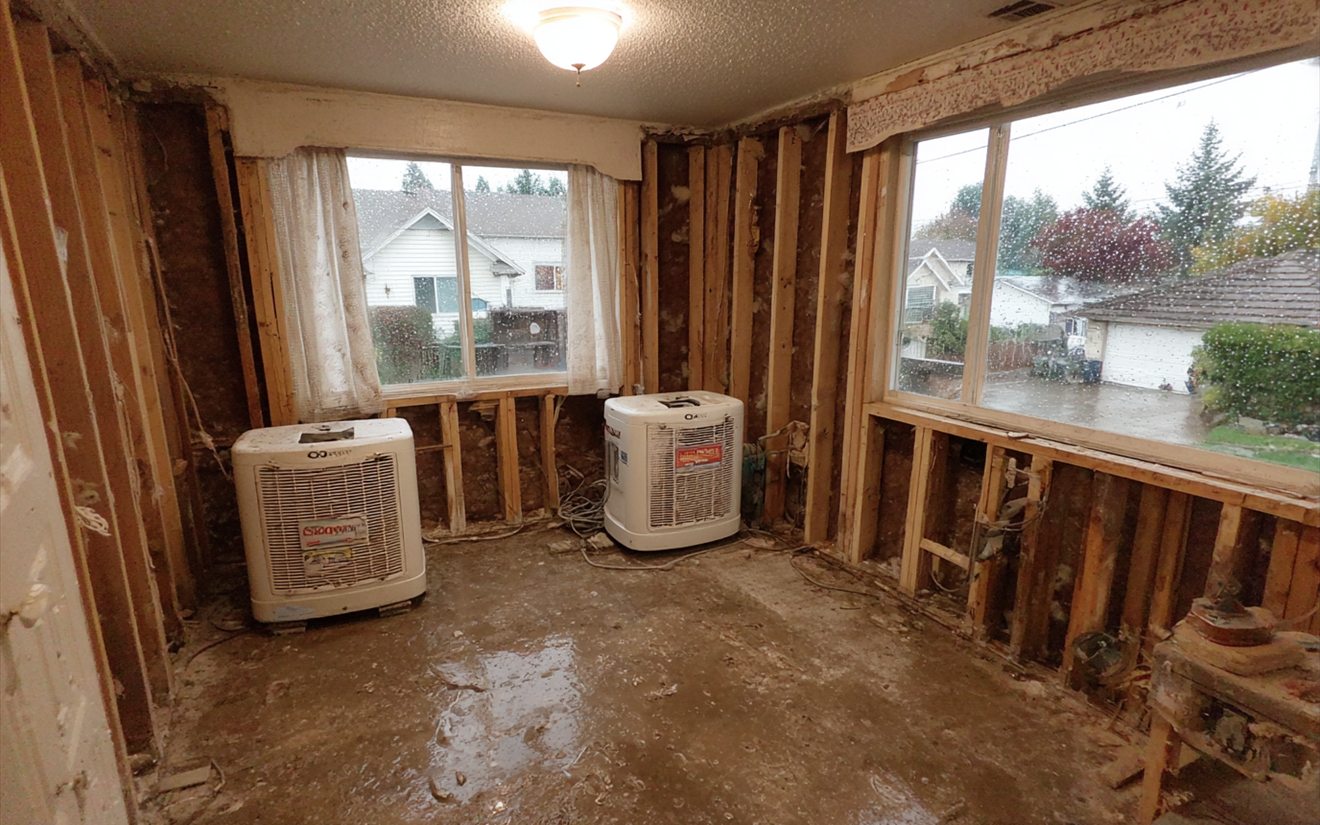
Drying a House While It Keeps Raining Outside
Why wet-season drying takes equipment and patience.

Condensation or a Leak? Wet Windows and Damp Walls in Winter
How to tell the two apart.