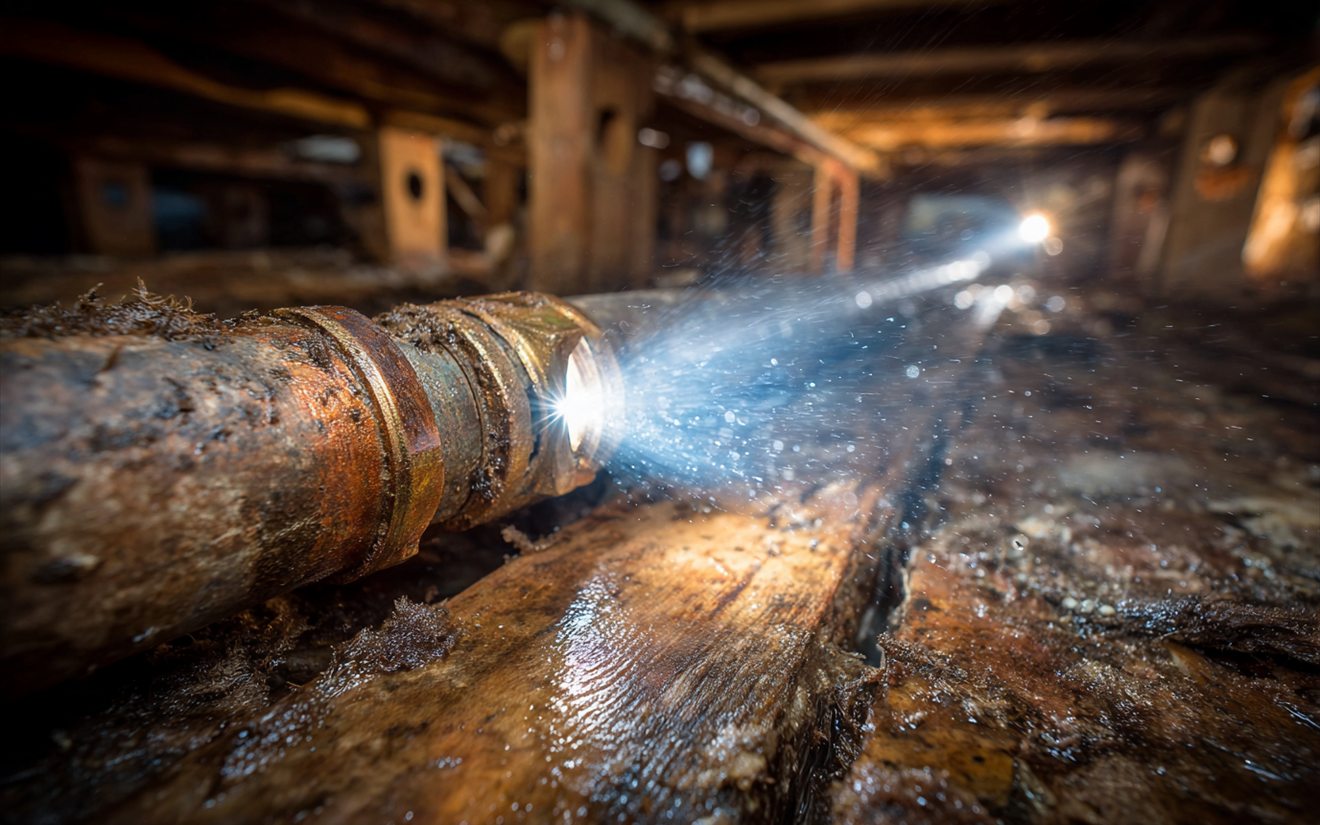
Most Everett winters are wet rather than cold. Days hover above freezing, and many houses were built for rain, not for deep freezes. That's exactly why the occasional cold snap does so much damage. A few nights of cold, dry air pouring south from Canada, often with strong northerly or northeasterly winds, can drop temperatures well below freezing. Pipes in crawlspaces, garages, outside walls and unheated additions that never had to deal with a hard freeze suddenly do.
Why the Cold Comes Fast
In a typical Everett winter, mild air off the Pacific keeps temperatures moderate. Every so often, though, cold air from the interior of British Columbia spills south through the mountain gaps and across northern Puget Sound. Forecasters call these outflow events. They can bring a sharp drop in temperature, wind chill, and sometimes snow, and they can last several days. When they arrive after a long mild stretch, people haven't taken any precautions.
Which Pipes Freeze
| Where | Why it's at risk |
|---|---|
| Crawlspace lines | Open vents let cold air under the floor; lines run close to them |
| Outside walls | Lines in exterior walls with thin or missing insulation |
| Garages | Unheated, often with water heaters and laundry lines |
| Outdoor faucets | Hose bibs left with hoses attached trap water |
| Unheated additions | Rooms added later with less insulation |
| Under sinks on outside walls | Cabinet doors closed keep warm air away |
Wind makes it worse. A strong cold wind finds every gap in a crawlspace or an old wall.
The Delay Between Freeze and Flood
A pipe usually doesn't leak while it's frozen. Ice blocks the split. The water comes when the weather warms and the ice melts, often a day or two after the coldest night. By then the leak may be under the floor, inside a wall, or in the garage, running at full pressure. In a crawlspace, it can run for a while before anyone notices.
Before a Forecast Cold Snap
- Disconnect hoses and shut off or protect outdoor faucets.
- Close crawlspace vents temporarily if your house has closable vents, and reopen them after.
- Open cabinet doors under sinks on outside walls so warm air reaches the pipes.
- Let a faucet drip on lines that have frozen before.
- Keep the heat on even if you're away, and set it no lower than you'd want for the pipes.
- Know where the main shutoff is, and make sure you can turn it.
After the Cold
- As it warms, watch for water: under sinks, in the garage, in the crawlspace, at ceilings below the attic.
- Listen for running water with everything off, and check the water meter.
- If a pipe has split, shut off the main right away.
- Photograph the break and the water.
- Call. Water from a split line often reaches more than the spot you see.
The pipe repair is separate work. The restoration side is finding and drying every place the water went.
If You're Away When It Freezes
Cold snaps often arrive around the holidays, when people travel. A house left at a low thermostat setting, with the water on, is the classic setup for a burst line that runs for days before anyone sees it. Before leaving in winter:
- Shut off the main water, and open a faucet briefly to relieve pressure in the lines.
- Keep the heat on at a setting that protects the pipes.
- Ask someone to check the house if a hard freeze is forecast while you're gone.
- Landlords: remind tenants before a forecast cold snap, and make sure vacant units are protected.
What Gets Wet After a Freeze Break
Freeze breaks tend to happen in places that hide water: inside an outside wall, above a garage ceiling, under the floor. When the line thaws, water runs at full pressure into the cavity, the insulation and the framing. By the time it shows inside, it's often spread across several feet of wall or floor. That's why a company opens and reads the area around the break, not just the spot where water appeared.
Questions
Why do pipes freeze here if winters are mild?
Because cold snaps are rare and short, so many houses aren't built or prepared for them. Lines in crawlspaces and outside walls are exposed when the cold arrives.
Should I close my crawlspace vents in winter?
Closing them temporarily during a hard freeze can help protect pipes. Many houses are designed to have them open the rest of the time, so reopen them when the cold passes.
Will a frozen pipe always burst?
No, but freezing can crack a pipe or loosen a fitting even if it doesn't split open. Check for leaks as it thaws.
Around Everett
Crawlspace houses in View Ridge, Mountlake Terrace and Mill Creek are where freeze leaks hide. Burst lines are covered on pipes, heaters and appliances.
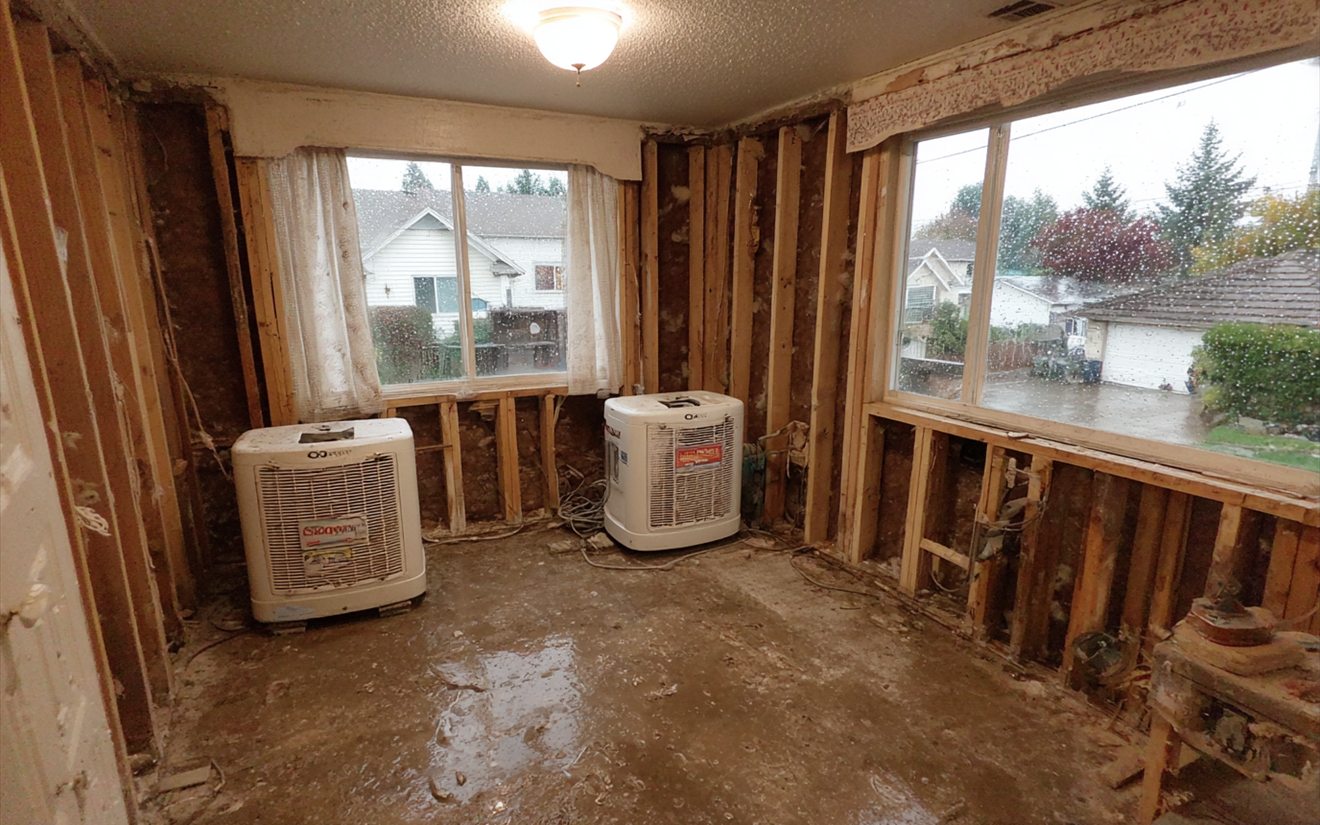
Drying a House While It Keeps Raining Outside
Why wet-season drying takes equipment and patience.
Basements and the Water Table in the North End
Why basements leak in long wet spells and not single storms.