
Everett gets about 39.7 inches of rain in a typical year, according to the NOAA 1991–2020 climate normals. That's not a huge number by Northwest standards, but the way it falls matters more than the total. It comes as months of steady, frequent rain from October into spring, with a short, dry summer in between. The wet months don't flood houses with one big storm; they wear on them. Roofs stay damp for weeks, the ground fills up and stays full, and small weaknesses that would never show in a dry place eventually let water in.
The Year in Numbers
| Month | Average rain | What it means for a house |
|---|---|---|
| January | 4.58 in | The ground is at its wettest; basements and crawlspaces take water |
| February | 3.48 in | Still saturated; occasional cold snaps can freeze pipes |
| March | 4.26 in | A second wet stretch; roof leaks that started in winter keep going |
| April | 3.22 in | Easing off; stains from winter leaks are easiest to spot |
| May | 2.55 in | Drying out; a good month to inspect for winter damage |
| June | 2.26 in | Mostly dry; water damage shifts to plumbing and appliances |
| July | 1.04 in | The driest month |
| August | 0.93 in | Dry; gutters fill with debris and roofs sit untested |
| September | 1.89 in | The first fall rains find what summer opened up |
| October | 3.75 in | The wet season starts; first ceiling stains appear |
| November | 5.56 in | The wettest month; river high water becomes likely |
| December | 5.28 in | Heavy rain on already full ground; flooding along the river |
Source: NOAA 1991–2020 normals for Everett.
Why the Wet Season Is Hard on Houses
The ground never dries out. By late November, weeks of rain have filled the soil. Water that would soak away in September instead pushes against foundation walls and rises under crawlspaces. That's why so many basement calls come in the middle of winter rather than after the first storm.
Roofs stay wet. In a dry climate, a roof dries between rains. Here it can stay damp for days on end, and moss and debris hold water against it. A small gap in flashing or worn shingles gets weeks of water to work with.
Walls get rain from the side. Storms off the Sound often come with wind, which drives rain against west- and south-facing walls and into window frames and siding joints.
Inside air stays damp. Closed-up houses in the wet season trap moisture from cooking, showers and breathing, and that condenses on cold windows and walls. That isn't a leak, but it can look like one.
A Season-by-Season Checklist
Late summer, August and September:
- clean gutters and downspouts and make sure water drains away from the foundation
- look at the roof from the ground for moss, missing shingles or lifted flashing
- check that crawlspace vents and basement window wells are clear
Early wet season, October and November:
- watch top-floor ceilings and the tops of walls after the first long rains
- look for water along the bottom of basement walls after several wet days
- check west-facing windows after windy storms
Midwinter, December to February:
- keep an eye on the basement and crawlspace through long wet stretches
- protect exposed pipes before forecast cold snaps
- know your main water shutoff
Spring, March to May:
- look for stains and damp spots left over from winter
- dry out and repair anything that took water
For Landlords
A rental goes through the same rain year, but the people living in it may not notice slow problems or may not report them right away. A quick look at gutters, roofs and basements before October, and a reminder to tenants to report stains and damp spots in writing as soon as they see them, catches most wet-season damage while it's still small.
When to Call
A one-time drip that dries quickly may be nothing. Call when water keeps coming back with the rain, when a stain is growing, when a basement wall stays wet, or when you can smell damp in one area. Water that has been seeping for weeks has usually soaked more than the spot you can see.
Questions
Why do leaks seem to start in the middle of winter?
Because the first rains get absorbed. Moss, roofing, insulation and soil all soak up water before it shows. By midwinter they're saturated, and small openings finally show.
Is it normal for a basement to be damp in winter?
Some dampness is common in older basements. Standing water, a wet line along the wall, or carpet that stays wet is beyond normal and worth having dried.
Does the dry summer help a house dry out?
It helps surfaces, but water trapped in a wall cavity or under a floor can stay wet into summer unless it's opened and dried.
Around Everett
Older roofs in Northwest Everett and west-facing walls in Edmonds feel the wet season most. Leaks into ceilings and walls are covered on rain getting in.
National Weather Service Seattle
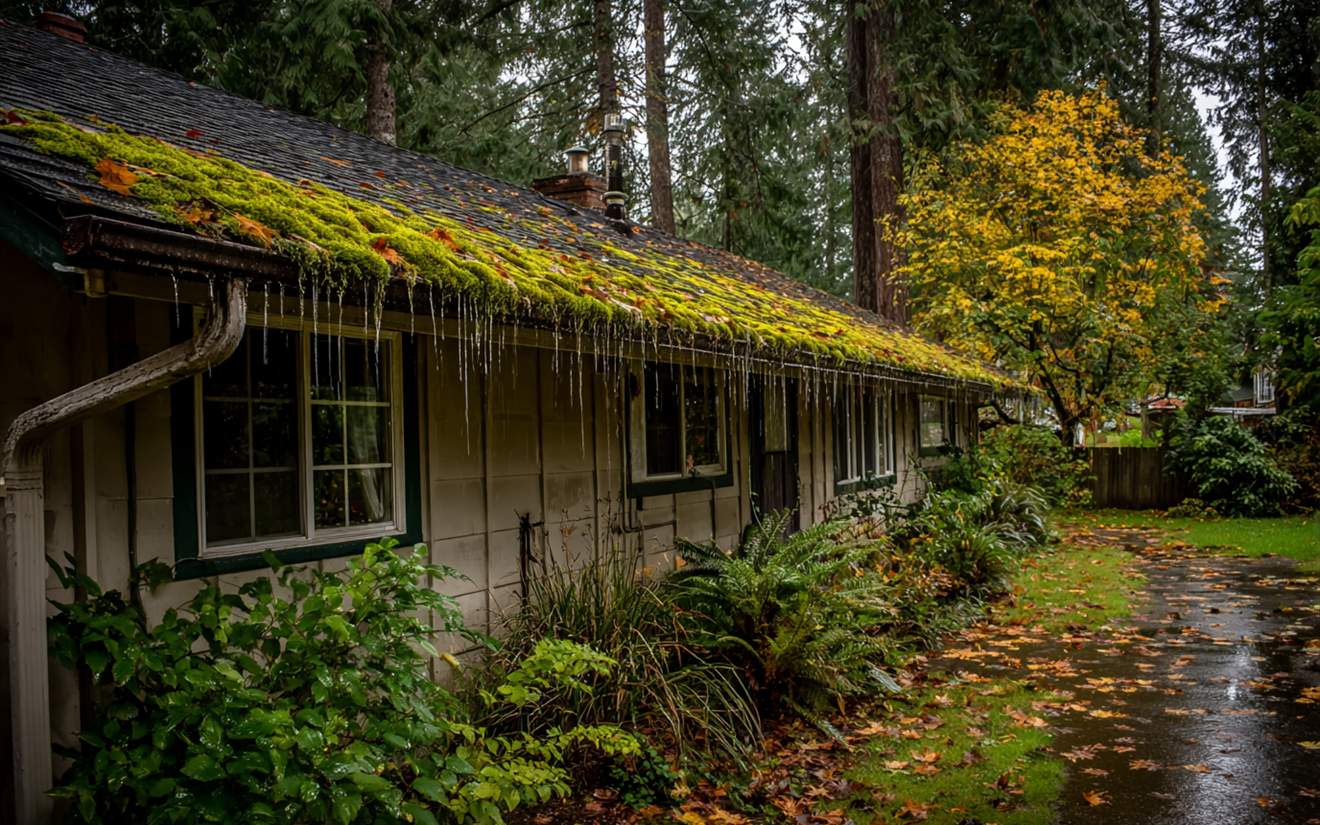
Moss, Drizzle and Old Roofs: How Rain Finds the Ceiling
The slow way rain gets into an attic.
Basements and the Water Table in the North End
Why basements leak in long wet spells and not single storms.