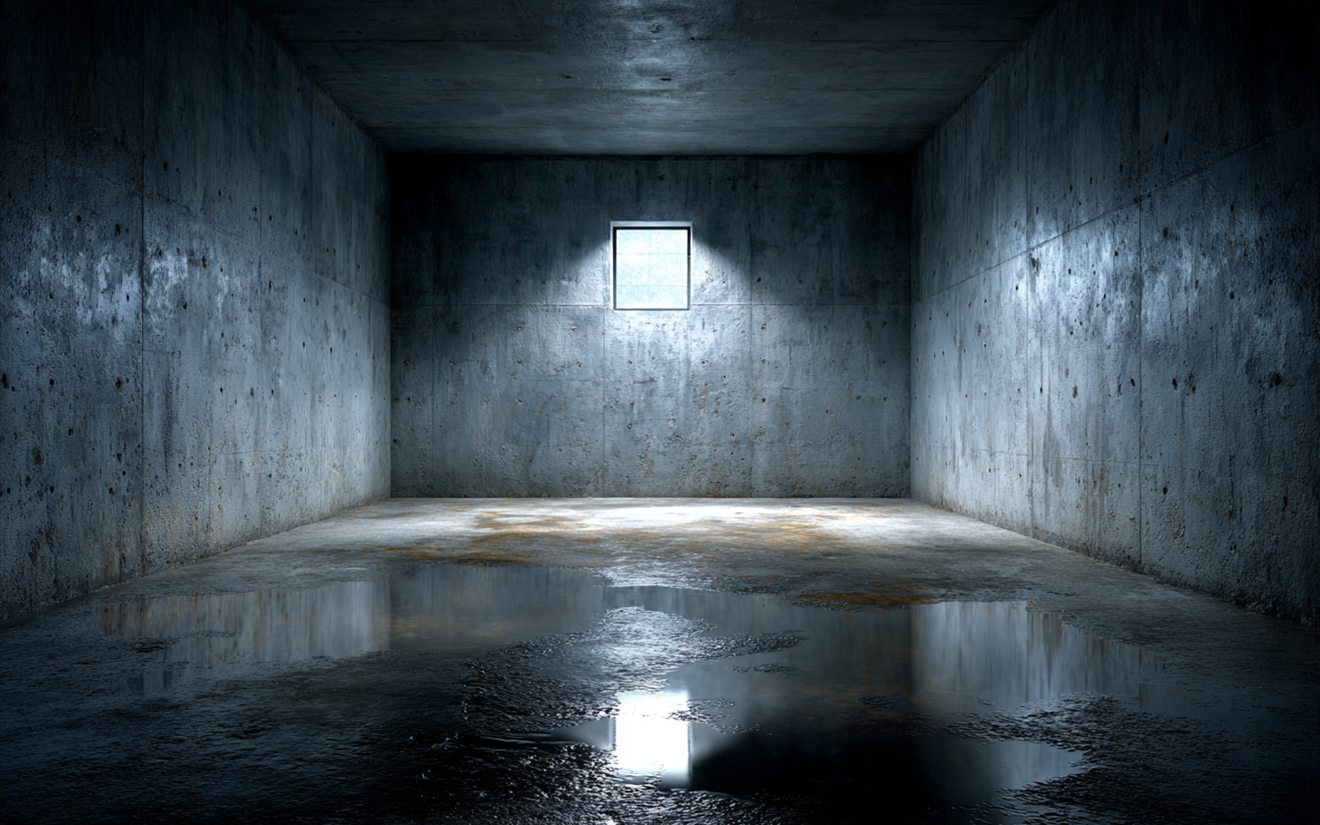
A lot of older Everett houses, especially in the north end of the peninsula, were built with basements. They're useful space, and they're also the part of the house that sits in the ground. In a dry month that doesn't matter. In the middle of an Everett winter, after weeks of rain have filled the soil, the ground around a basement holds a lot of water, and that water is pressing on the walls and floor looking for a way in.
What "the Water Table" Means
The water table is the level below which the ground is saturated. In summer it sits lower; in a long wet season it rises, sometimes close to the surface in low or poorly drained spots. When it rises above the bottom of a basement, the water outside is higher than the floor inside. Concrete isn't watertight, and every joint, crack and pipe opening becomes a path.
That's why basement water in Everett so often follows a pattern: dry after the first fall storm, damp after a wet week, and actively seeping after a long wet stretch in December or January. It also explains why water can keep coming for a day or two after the rain stops. The ground drains slowly.
How Water Gets In
| Where | What it looks like | Why |
|---|---|---|
| The joint where the floor meets the wall | A wet line along the bottom of the wall, puddles at the edges | Ground water pushing in at the weakest seam |
| Cracks in the walls or floor | A damp streak or a slow trickle | Pressure forcing water through the crack |
| Around pipes and openings | Wet spots where lines enter the basement | Gaps around the opening |
| Basement windows and wells | Water on the sill or running down the wall | A well filling faster than it drains |
| The middle of the floor | Water rising through the slab or a floor drain backing up | High ground water or a drain issue |
Not every wet basement is ground water. A leaking supply line, a water heater, a washer or a floor drain can all put water on a basement floor in dry weather. The timing usually tells them apart.
What It Does to a Finished Basement
An unfinished basement with a concrete floor handles a little water without much harm. A finished one doesn't. Carpet pad soaks up water before the carpet feels wet. Drywall wicks it upward from the floor. Insulation behind the drywall, against cold concrete, holds it there. Wooden framing on the floor absorbs it. By the time anyone notices a musty smell or a stain, the water has often spread well beyond what's visible.
Drying a finished basement usually means:
- removing wet carpet pad, and often the carpet
- cutting out the bottom of drywall where readings show water
- removing wet insulation behind it
- drying the framing, the wall cavity and the concrete with dehumidifiers and air movers
- replacing what came out once everything reads dry
Keeping the Water Out
These steps don't stop high ground water entirely, but they help:
- Downspouts: extend them so roof water lands well away from the foundation.
- Grading: soil should slope away from the house, not toward it.
- Gutters: clean them before the wet season so they don't overflow next to the wall.
- Window wells: keep them clear of leaves and dirt so they drain.
- Know the signs early: check the basement after the first long wet stretch each fall.
Work on drainage, foundations or waterproofing is separate from restoration. The restoration side is drying what got wet and putting it back.
Older Basements, Older Materials
Some of the north end's basements are close to a century old. Their walls may be older concrete, block or even stone in places, and many have been finished and refinished over the years. That brings its own problems: old paneling glued over damp walls, carpet laid straight on concrete, framing built without any gap from the floor. When water gets in, those layers hide it and hold it. Expect a company to look behind and under, not just at the wet spot.
Questions
Why does my basement only leak in winter?
Because the ground around it is fullest then. After weeks of rain, the water table rises against the foundation, and water finds the seams and cracks.
Is water in a basement after rain clean?
Ground water is treated as dirty, because it comes through soil. Materials it soaks into, like carpet pad and insulation, usually come out.
Can a basement be dried while it's still raining?
Yes, but if ground water is still coming in, drying can't finish until it stops or slows. A company may run equipment through a wet spell and finish once the seepage ends.
Around Everett
Older basements are common in Northwest Everett and Riverside, and sloping lots in Boulevard Bluffs add hillside water. Basement drying is covered on basements and crawlspaces.
USGS on ground water and the water table

Everett's Rain Year: What 40 Inches Does to a House
A month-by-month look at the wet season and the dry one.

Bluff Lots Above Port Gardner Bay: Water Moving Toward the House
Why sloping lots get wet on the uphill side.