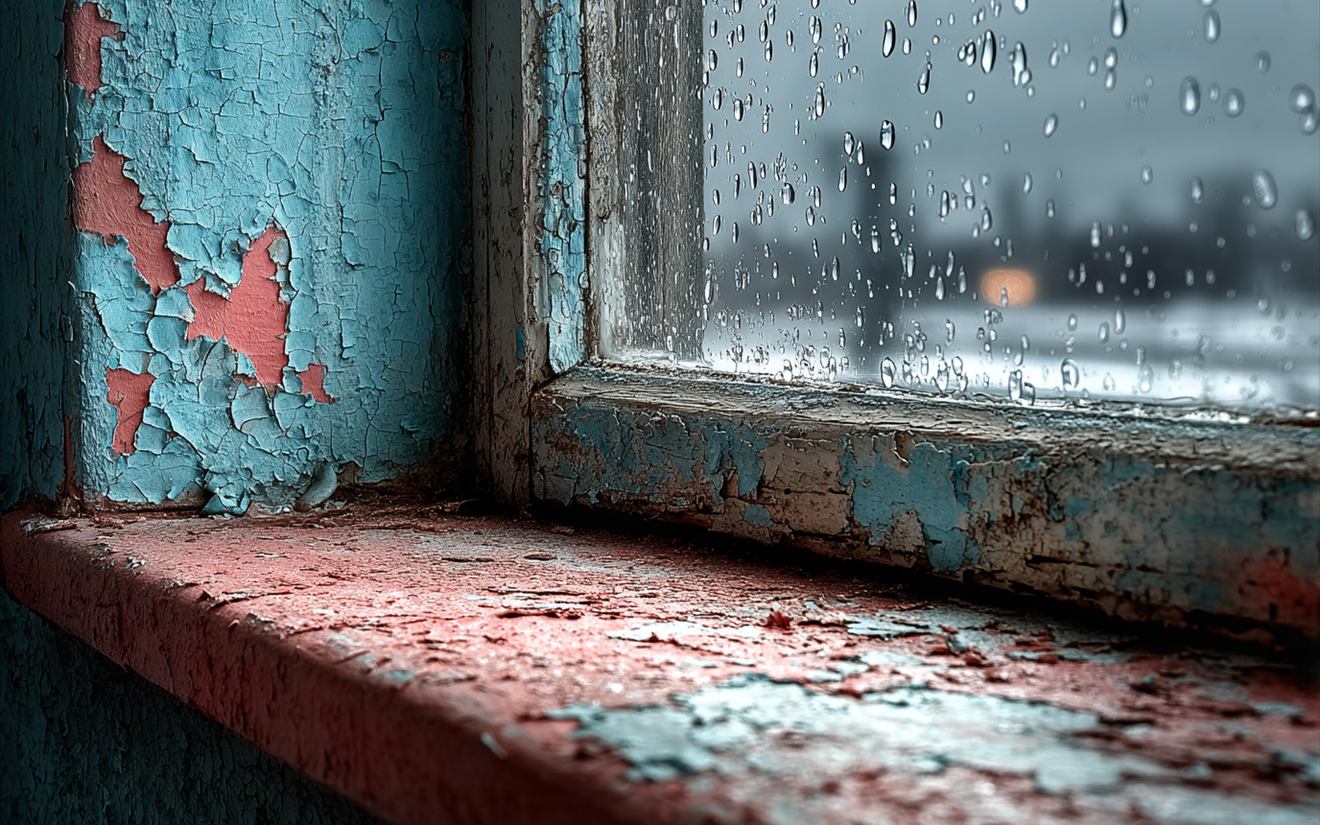
In an Everett winter, houses are closed up against the rain for months. Inside, people shower, cook, dry laundry and breathe, all of which add moisture to the air. That moist air meets cold windows and cold outside walls, and the water in it condenses. The result can look a lot like a leak: water on window sills, damp patches on walls, peeling paint in corners. Sometimes it is a leak. Telling the two apart saves time and points you to the right fix.
How to Tell Them Apart
| Clue | Condensation | Leak |
|---|---|---|
| Where it shows | On the coldest surfaces: glass, window frames, outside corners, closets on outside walls | In one specific place, often near a window, roof edge, pipe or fixture |
| When it shows | Mornings, cold nights, after showers or cooking | During or after rain, or when a fixture is used |
| How it spreads | Spread out, along the bottom of windows or across a wall | A stain with an edge, often growing |
| Inside the wall | Usually dry inside; moisture is on the surface | Wet inside the wall, often at the bottom |
| With rain | Doesn't depend on rain | Gets worse with rain or wind-driven storms |
| With better ventilation | Improves when you run fans and open a window briefly | Doesn't change |
A moisture meter makes the difference clear: condensation leaves surfaces damp, while a leak leaves the wall or framing wet behind the surface.
Common Condensation Spots
- Window glass and frames, especially older single-pane or aluminum windows.
- Bedroom walls on outside corners, where furniture blocks air.
- Closets on outside walls, where air doesn't move.
- Bathrooms without working exhaust fans.
- Basements, where warm, moist air meets cold concrete.
Common Leak Spots That Look Like Condensation
- Under a window where water gets past the frame in wind-driven rain.
- At the top of an outside wall where roof water runs down inside.
- Near a bathroom or kitchen where a supply line or drain is leaking in the wall.
- In a ceiling corner below a roof valley or a chimney.
Reducing Condensation
- run bathroom and kitchen exhaust fans, and leave the bathroom fan on a while after showers
- keep furniture a few inches off outside walls
- open closet doors on outside walls now and then
- use a dehumidifier in damp rooms or the basement
- vent the dryer outside, and avoid drying laundry indoors where you can
- open a window briefly on a dry day to swap out damp air
When It's More Than Condensation
If a damp area stays wet in dry weather, grows during rain, has a clear edge, or the wall feels soft, it's likely a leak. Water in a wall cavity doesn't dry on its own, so it needs to be found and dried properly. That's when to call.
A Simple Test at Home
If you're not sure which you're dealing with, a few days of watching helps:
- Wipe the area dry and note the date, the time and the weather.
- Run the bathroom and kitchen fans and keep the indoor air a little drier for two or three days, with a dehumidifier if you have one.
- Watch what happens. If the dampness fades with drier air and comes back on cold mornings, it's likely condensation. If it comes back after rain whatever you do inside, or grows in one spot, it's likely a leak.
- Check the other side. Look outside the wall for a gap at the window trim, damaged siding or a gutter spilling against it.
In Rentals
Condensation comes up a lot in rentals, because it sits between the landlord's building and the tenant's daily habits. Tenants can help by running fans and not blocking heaters or vents. Landlords should make sure exhaust fans work and windows close properly. When a damp patch grows or comes back with the rain, it's a leak, and it should be reported and checked like any other.
Questions
Is it normal for windows to sweat in winter?
Some condensation on cold glass is common, especially on older windows. Water running down and pooling on sills every day is a sign the indoor air is too damp.
Can condensation cause water damage?
Yes, over time. Water that collects on sills and walls day after day can damage paint, trim and drywall, and keep the area damp.
How do I know for sure?
A moisture reading inside the wall is the clearest test. A restoration company can check where the water is and whether it's coming from outside or inside.
Around Everett
Older windows in Bayside and two-story homes in Silver Lake see both condensation and leaks. Wall leaks from rain are covered on rain getting in.

Everett's Rain Year: What 40 Inches Does to a House
A month-by-month look at the wet season and the dry one.
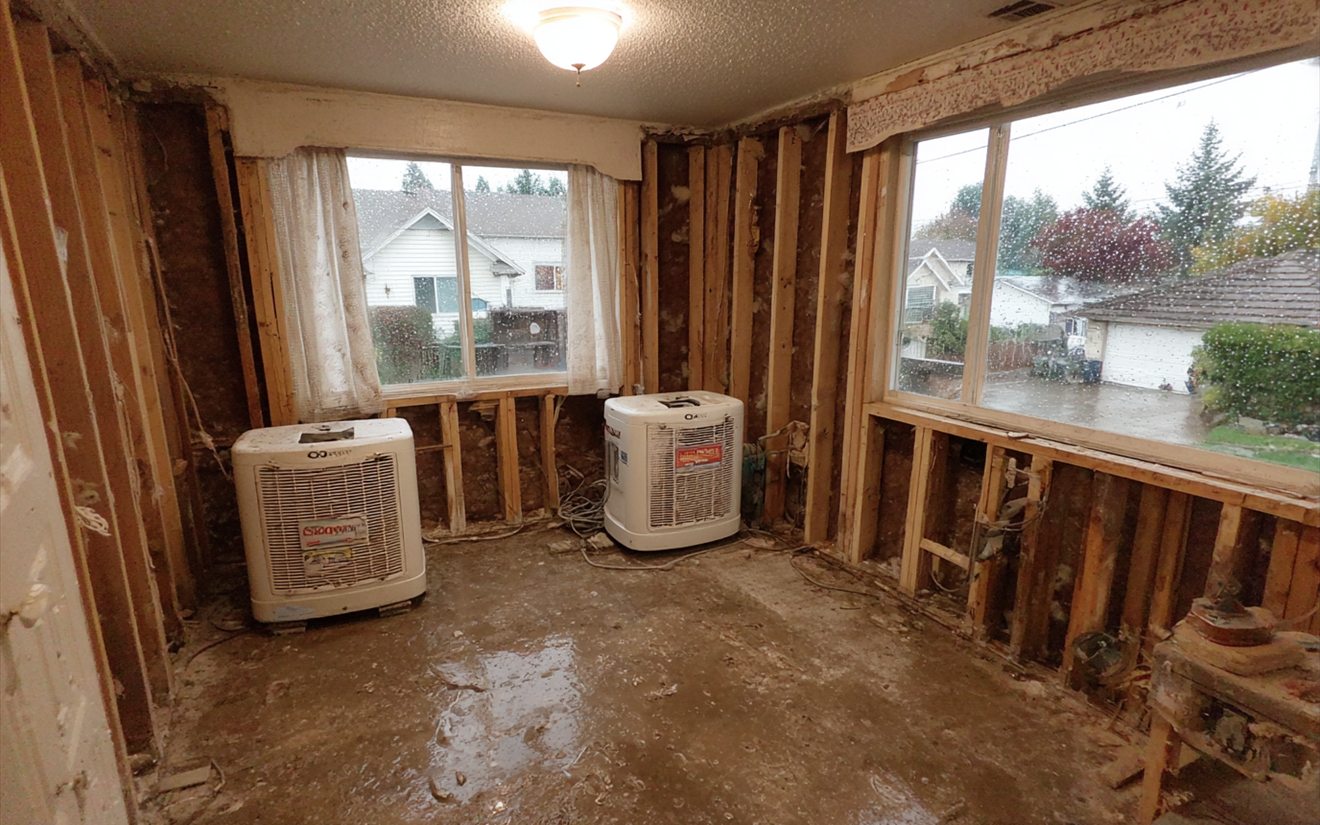
Drying a House While It Keeps Raining Outside
Why wet-season drying takes equipment and patience.