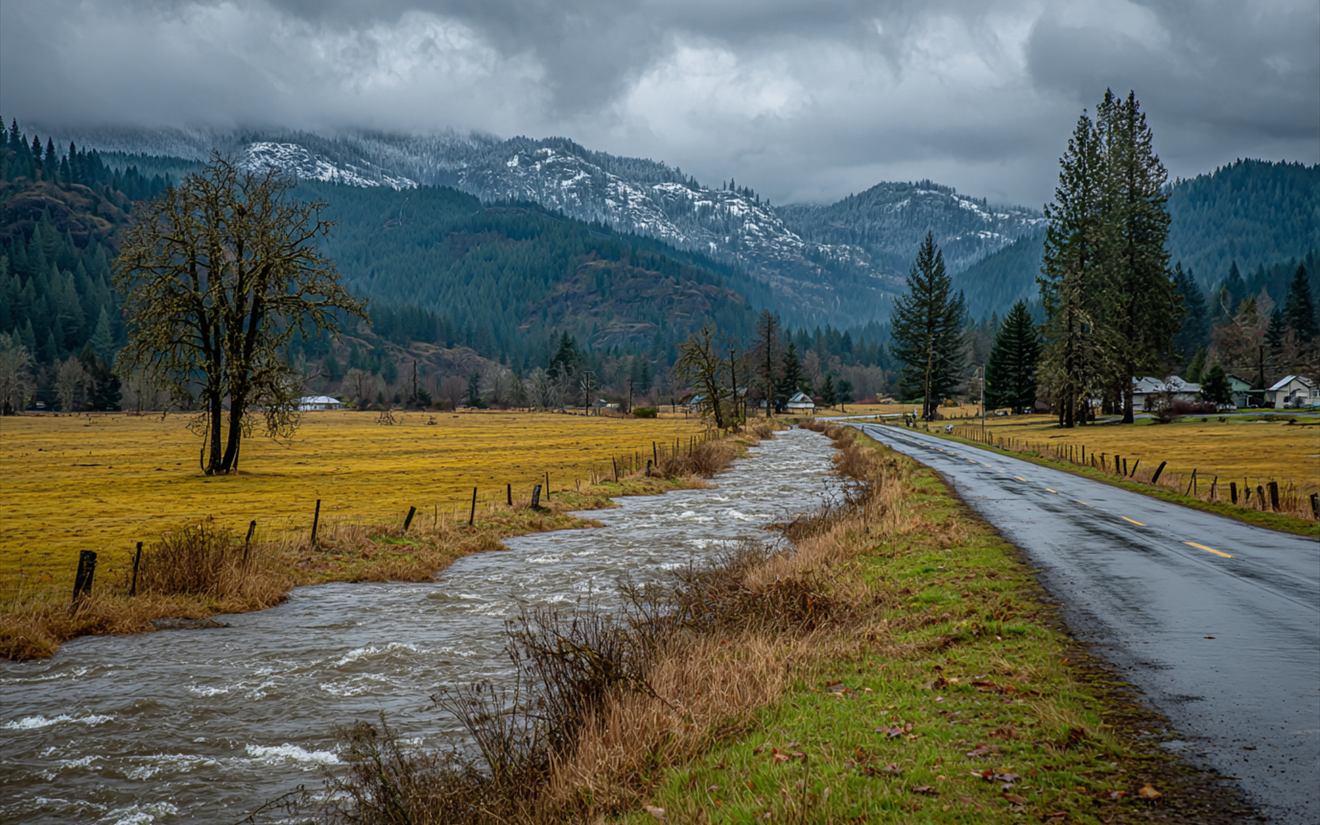
Everett is built where the Snohomish River meets salt water. The city sits on a peninsula at the river's mouth, with Port Gardner Bay on one side and the river on the other, and north and east of it the river spreads into a wide, flat delta of farmland, sloughs and islands. Much of that low land is protected by dikes. Most of the time the arrangement works. In a big winter storm, it gets tested, and the houses on the low ground near the river are the ones that find out how well.
How the River Floods
The Snohomish is formed up the valley near Monroe, where the Skykomish and Snoqualmie rivers join. Both drain the Cascades. When a strong, warm storm drops heavy rain on the mountains, sometimes on top of early snow, all of that water comes down the valley toward Everett within a day or two. The county says its floods usually happen between November and February, after periods of heavy rain.
The river's levels are tracked at gauges along the valley. Near Monroe, the Everett Herald has reported flood stage at 14 feet, with dikes at risk of failing around 17 feet and near-record flooding around 20 feet. Farm interests in the county have said serious damage usually starts when the river runs three to four feet above flood stage.
The Dikes
The delta's farmland has been diked for well over a century, much of it by local dike and drainage districts. Some roads do double duty: the Lowell–Snohomish River Road between Lowell and Snohomish works as a dike, the only barrier between the river and the homes behind it in places. Ebey Island and the Marshland area have their own districts and their own histories of breaches and repairs. A 1991 Seattle Times feature described how farmers in one district raised their dikes higher than their neighbors', and how the largest of them gave way anyway.
The point for a homeowner is simple: a dike lowers the risk, but it doesn't remove it. The land behind a dike is still low ground.
What Recent Floods Have Looked Like
On December 11, 2025, during record flooding across Snohomish County, river water covered Lowell–Snohomish River Road and properties along it, and rescues were reported around the county. In December 2023, the county issued an emergency proclamation after flooding. Floods like these don't usually reach downtown Everett, which sits higher, but they reach the low edges: Lowell, the river side of the north end, the farmland around Snohomish and Monroe, and the delta toward Marysville.
What River Water Does to a House
| Part of the house | What floodwater does | What usually happens to it |
|---|---|---|
| Garage and lower floor | Fills with silty water, often for hours or days | Extraction, then cleaning of every hard surface |
| Carpet and pad | Soaks up contaminated water | Removed |
| Drywall | Wicks water well above the flood line | Cut out above the highest wet point |
| Insulation | Holds water and silt in the wall | Removed |
| Crawlspace or basement | Floods, then stays wet while the ground drains | Pumped out, wet insulation removed, dried to readings |
| Furniture and belongings | Contaminated where they touched water | Many porous items discarded; photograph first |
River water isn't clean. It carries silt, farm runoff and whatever it picked up on the way, so restoration companies treat it as contaminated. That changes the cleanup: more removal, more cleaning, and a longer job than a burst pipe.
When the River Is Rising
- Follow the warnings. The National Weather Service office in Seattle issues flood watches and warnings for the Snohomish River.
- Move what you can up and out of the garage and lower floor.
- Don't drive or walk into floodwater. It can be deeper and faster than it looks.
- Shut off electricity to flood-prone areas only if you can do it safely before water arrives.
- Leave when told to. No house is worth the risk.
After the Water Goes Down
- Wait until officials say it's safe to go back.
- Take pictures of it all before moving or discarding anything.
- Don't touch electrical equipment that got wet.
- Get the water and silt out quickly; the longer it sits, the more has to come out.
- Check your policy. Most homeowners policies exclude flood; it takes a separate flood policy.
Questions
Does living behind a dike mean I'm safe from flooding?
No. A dike reduces the chance of flooding but doesn't eliminate it. Water can overtop or breach a dike in a big enough flood, and seepage can raise ground water behind it.
How fast does the river rise?
It depends on the storm, but the biggest floods come a day or two after heavy rain in the mountains. Forecasts and warnings usually give some notice.
Will a basement keep flooding after the river goes down?
It can. Low ground near the river stays saturated for days or weeks, so ground water can keep seeping in after the floodwater recedes.
Around Everett
The river touches Lowell, Snohomish, Monroe and the delta toward Marysville. Getting floodwater out is covered on water removal and cleanup.
National Weather Service Seattle
Snohomish County Flood Maps and Elevation
How to read the maps, and what they don't tell you.

Everett's Rain Year: What 40 Inches Does to a House
A month-by-month look at the wet season and the dry one.